Understanding leadershipNovember 27, 2015
Understanding leadership – Part 11: Do you understand Taylorism?

Taylorism = reorganisation of work
Mention Taylorism today and you may think of assembly lines or lump it with other "-isms"—feudalism, communism, Catholicism, etc. Assembly lines are the wrong association, but Frederick Winslow Taylor did create an "-ism". In the 1930s his system of "scientific management" spread worldwide. Picture an industrial firm around 1870, e.g. a steelworks: Subcontractors—mostly skilled tradesmen—each employed armies of unskilled workers, women, children and horses. A subcontractor was paid per tonne of iron produced and paid his helpers from that. Such subcontracting caused irregular output, uncertain quality, embezzlement, etc. The main problem: the production process was wholly controlled by skilled subcontractors who brought their own methods, rules of thumb and tools. Owners who wanted higher output or new technology hit walls with subcontractors.
Taylor developed a management system in which work itself was reorganised—against the old craft tradition—so factory owners could control the production process.
Subcontractors—mostly skilled tradesmen—each employed armies of unskilled workers, women, children and horses. A subcontractor was paid per tonne of iron produced and paid his helpers from that. Such subcontracting caused irregular output, uncertain quality, embezzlement, etc. The main problem: the production process was wholly controlled by skilled subcontractors who brought their own methods, rules of thumb and tools. Owners who wanted higher output or new technology hit walls with subcontractors.
Taylor developed a management system in which work itself was reorganised—against the old craft tradition—so factory owners could control the production process.
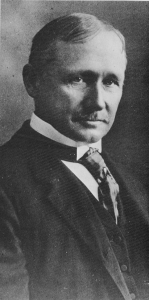 Taylor's life task: ending "systematic soldiering"
Taylor, from a wealthy family, apprenticed as a craftsman, then took a job as a worker at Midvale Steelworks, owned by his parents' friends. He became foreman in the turning shop. A dispute with his lathe operators lasted years: they had agreements on maximum parts per day. Taylor knew this well from his time as a lathe hand. From then on his task was to end this "systematic soldiering", as he called it. His life goal became finding tools so employers could counter workers' output restriction and secure "a fair day's work". He understood lathe operators' motives for everyday withholding:

"…under piece rates the art of systematic 'soldiering' is fully developed. Once a worker has seen pay per piece cut two or three times after he worked harder and raised daily output, he will likely lose sympathy for the employer and resolve never to allow further cuts if he can prevent them by holding back." (Taylor 1983, 1919 reprint, p. 23)
Taylor's life's work: standardisation and vertical division of labour
Taylor saw that workers could withhold effort because of their own work knowledge. Only they knew procedures, tools and rules of thumb for workable products. The owner could only influence the process from outside via incentives or sanctions."This tangled mass of rules of thumb and inherited knowledge may fairly be called every craftsman's greatest asset. Managers of the best old-style plants frankly admit that their 500 or 1000 workers across 20 to 30 trades own this body of knowledge while management does not." (Taylor 1983, 1919 reprint, p. 33)Taylor's only lasting way to stop everyday withholding was to study work, break it apart and reassemble it—taking from workers control over methods and tools. Thus vertical division of labour—separating planning and execution—became the dominant principle for decades. Early industrialisation left process and organisation in workers' and subcontractors' hands; Taylor's "scientific management" began unprecedented standardisation of operations, then precise specification of steps, minute control, and ultimately automation via machines. Today, in "digital transformation", much work happens on computers. We can only participate if we follow program rules; forms are accepted only with expected inputs. Tasks management had in Taylor's day are now done by computer systems we use daily. Every keystroke feeds data to steer and control our processes. Taylor would likely see this as a consistent extension of scientific management. We have gained new freedoms—but who is "we"? Creatives, consultants, trainers, coaches, HR and leaders might look into call centres, packing or alteration shops in praised firms whose top floors discuss democratisation or collaborative leadership. In leftover service-sector tasks, pure Taylorism still reigns—not to mention extended workbenches in emerging economies. That will not be reversed; many may accept it. Yet in fantasies of "Work 4.0" and "digital transformation" we can still shape actively. Those who want to shape the future must know the past. To grasp how the Taylor system still affects how we work and live, we must examine "division of labour"—next post. After that, Taylorist organisation in today's everyday business life.
Teilen:
Questions about this topic? Reach out to us - the intro call is free and without obligation.
Schedule callComments
No comments yet. Be the first!